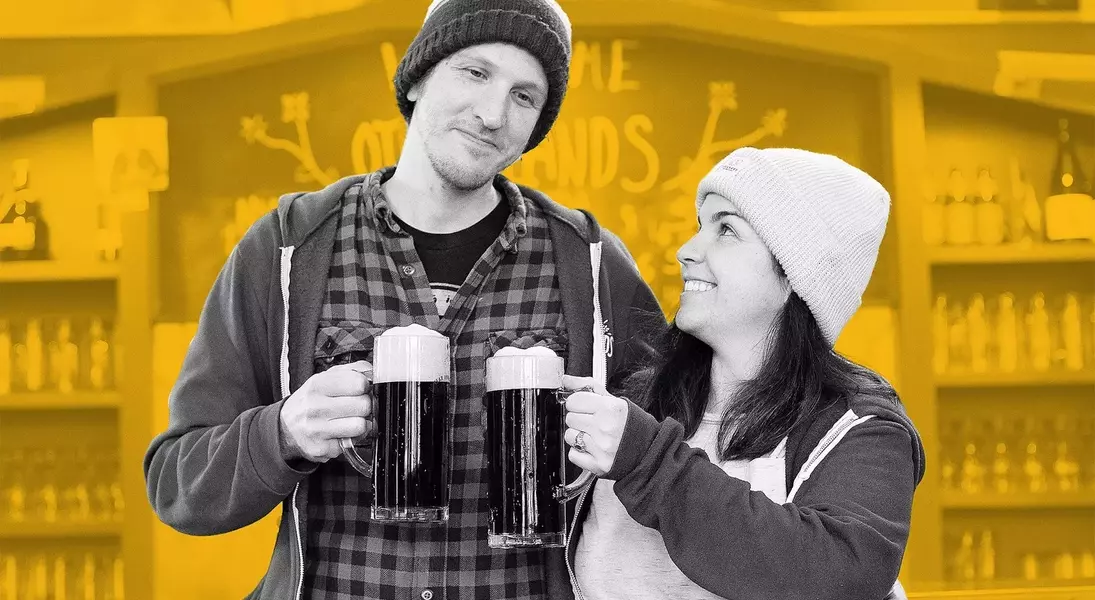
Crafting Excellence: Otherlands' Unconventional Path to Lager Perfection
The Culinary Journey into Brewing and the Franconian Inspiration
Ben Howe's career trajectory in brewing mirrors the exploratory spirit of a culinary artist more than that of a conventional brewer. His experiences span across diverse brewing environments, from Europe to both American coasts, punctuated by immersive internships at breweries that captivated his interest. A pivotal moment in his journey was a visit to the Zehender brewery in Monchsambach, which ignited a profound fascination with Franconian lager. This encounter sparked a nearly ten-year quest for Howe to fully comprehend the intricate nuances and flavor-producing mechanisms inherent in this specific beer style.
Revolutionizing Lager Production at Otherlands
More recently, at Otherlands Brewery, Howe has emerged as a trailblazer, pushing the boundaries of what is considered acceptable in brewing. He has deliberately challenged established dogma by experimenting with mashing at pH levels that are significantly outside the typical range. His goal with these extreme adjustments is to amplify both the color and flavor profiles of his beers. Remarkably, these seemingly unconventional methods have consistently yielded successful and distinct results, demonstrating that what appears counterintuitive can indeed be highly effective in the hands of an innovative brewer.
Synthesizing Traditional Wisdom with Contemporary Methods
In his pursuit of brewing excellence, Howe masterfully integrates time-honored techniques with contemporary innovations. His learning journey includes significant mentorship from esteemed brewers such as Will Meyers and Megan Parisi at Cambridge Brewing. He focuses on capturing the authentic \"Franconian character\" in his long-boiled lagers, drawing a clear distinction between traditional and modern German lager production. His techniques involve kräusening for natural carbonation, as opposed to spunding before terminal fermentation, and managing diacetyl precursors with ALDC without the conventional diacetyl rest. Furthermore, he achieves rich color using only pilsner malt and meticulously adjusts water hardness with calcium carbonate, magnesium carbonate, and gypsum for optimal lager brewing. He also experiments with mashing at pH levels exceeding 5.8 and maintaining atmospheric pressure during yeast fermentation, culminating in extended boiling of low-alpha hops to build complex flavor and texture.